
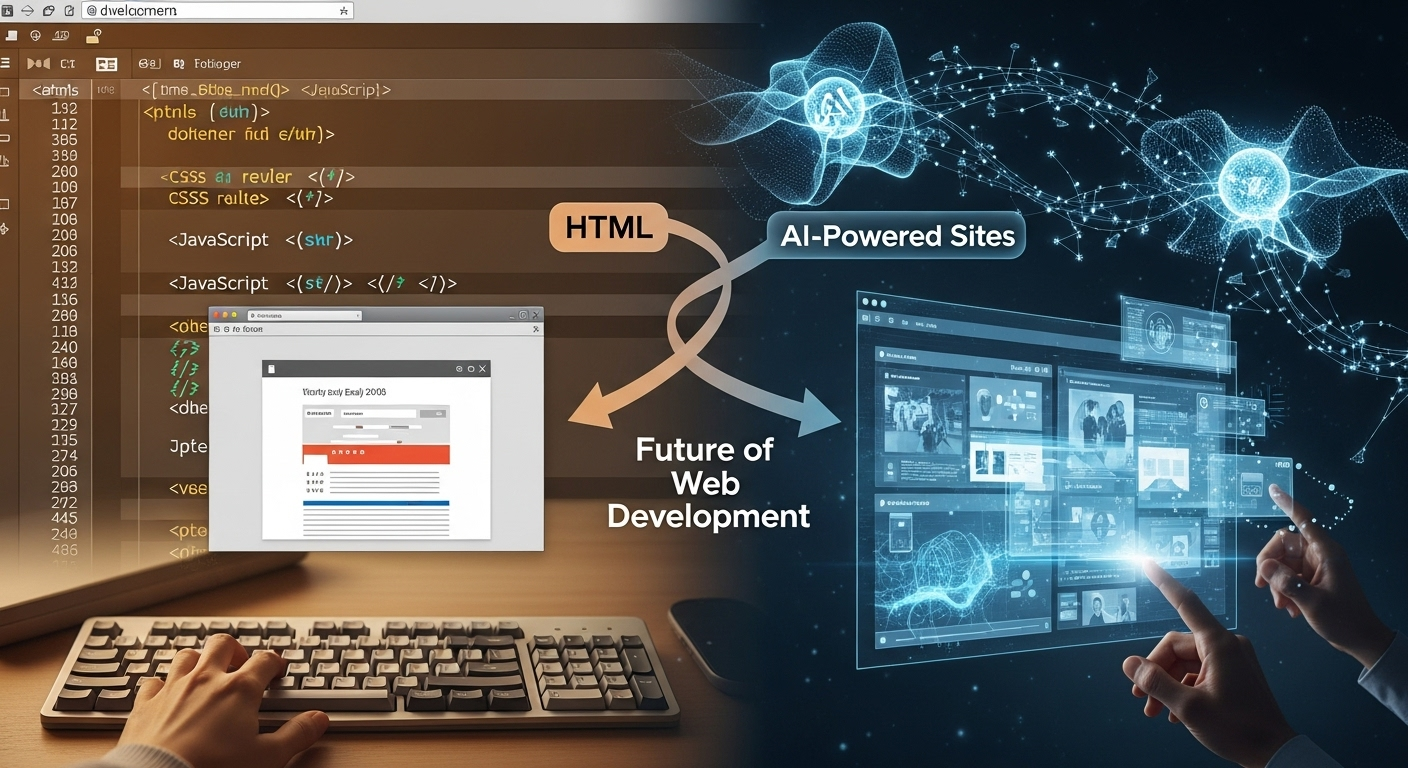
Future of Web Development: From HTML to AI-Powered Sites
Web development has evolved much more than it used to be long ago, with the antiquity of the static HTML pages. What began as a simple text-based website has now turned into intelligent, dynamic, and interactive platforms that operate through artificial intelligence (AI). With the evolution of technology, the future of web development is set to be more rapid and intelligent than ever before and more personal.
1. The Early Web: The Era of HTML
Originally web websites were created only in HTML – simple pages with text, links as well and little style. No animations, interactive designs or any other interactions. All updates had to be manually coded, and websites were strictly informational and not interactive.
2. The Emerging CSS and JavaScript.
Developers added CSS to be styled and JavaScript to be interactive to meet the expectations of users. This combination gave life to the websites with animations, hover effects, and responsive layouts. Three web frameworks, Bootstrap, React, and Vue.js, allowed more easier and seamless development modern and mobile-friendly websites.
3. The Change of Dynamic and Data-Driven Sites.
A significant advancement was the next server-side scripting language: PHP, Python, and Node.js, which enabled websites to show real-time data and process user input. CMS such as WordPress and Shopify transformed the way websites were built, as even a non-coder can create a full-fledged site.
4. The Artificial Intelligence Revolution in Web Development.
Nowadays, AI alters the way websites are created, developed, and maintained. Developers can use tools such as ChatGPT, GitHub Copilot, and AI-based website builders to produce code, debug, and write instantly. The algorithm of AI now tailors user experiences by examination of conduct, tastes, and interaction systems in real time.
Examples of AI in modern web development:
- Instant customer service chatbots.
- Auto-generating layouts using AI technologies.
- Optimisation of voice search.
- Forecasting to enhance customer interaction.
5. The importance of Automation and No-Code Platforms.
Development is being simplified on no-code and low-code platforms such as Wix, Webflow, and Bubble. They enable the creation of responsive sites in a visual manner that a business does not need to know much about it. Automation with AI is even faster in deploying, testing, and updating.
6. The Future of Web Development.
In the future, there will be further evolution of web development towards:
- AI-assisted coding and design - quicker and more accurate constructions.
- The smarter websites that are learner-responsive.
- Weaknesses: Enhance security and decentralisation through the integration of Web 3.0 and blockchain.
- Browsers Augmented Reality (AR) and Virtual Reality (VR) experiences.
- Performance and energy use optimisation, sustainability-driven development.
Conclusion
The history of web development has been striking since the beginning, with its creation as simple HTML pages, then the emergence of smart web applications that can be run by artificial intelligence. With further evolution of AI, the future of websites is not only to present the information but also to think, learn and evolve. It is the future of developers who will take this smart transformation.